No products in the cart.


Selecting a slit lamp is an important part of equipping an eye care clinic. The instrument should meet your clinicians’ examination requirements, fit the room’s layout and include the accessories needed for your practice.
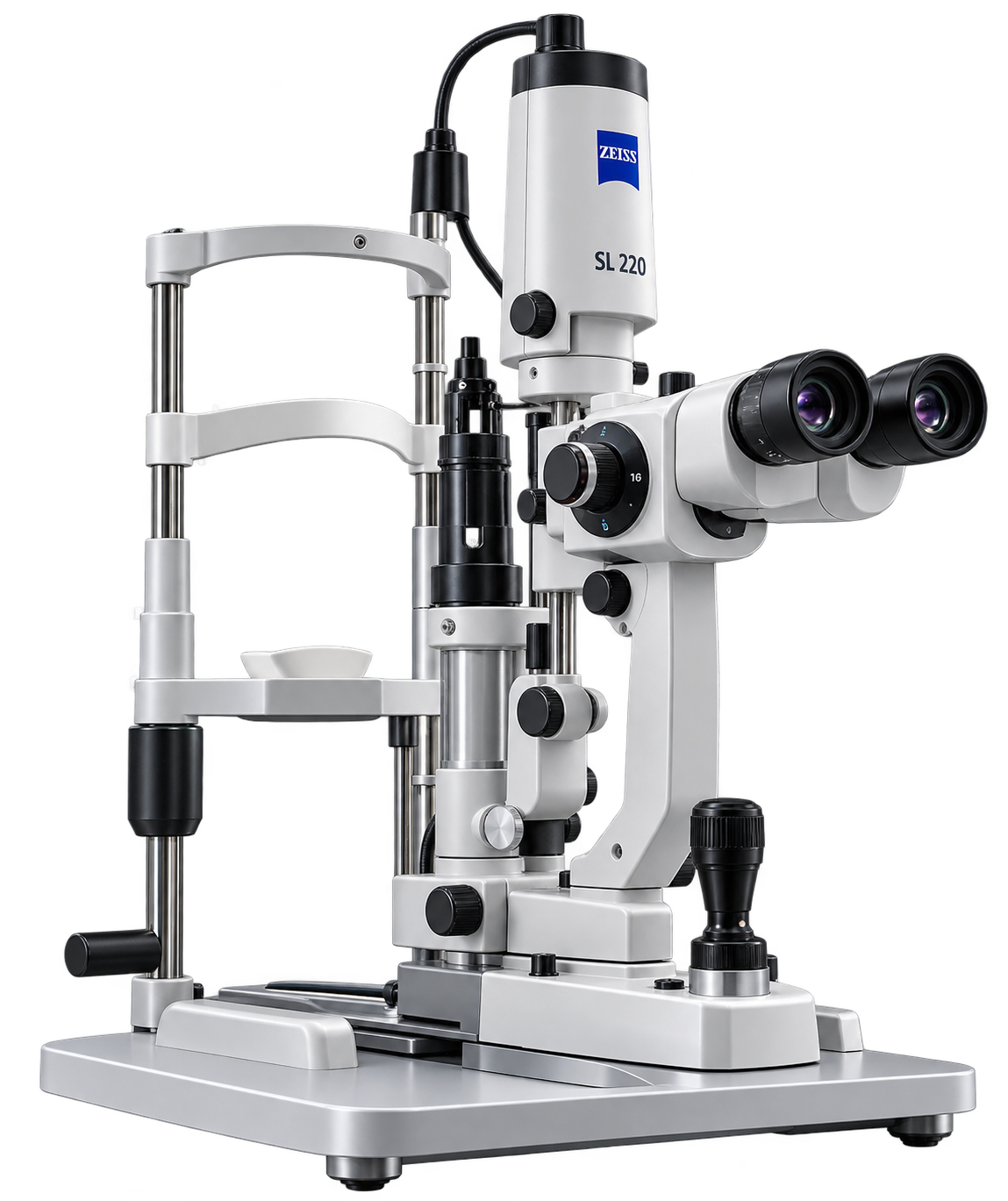
The ZEISS SL 220 offers a tower-style design with LED illumination and a choice of magnification configurations. For clinics evaluating this model, understanding its documented features and checking the specific equipment package are useful first steps.
This guide explains what to consider before purchasing a ZEISS SL 220 slit lamp.
The ZEISS SL 220 combines an optical viewing system with adjustable illumination. ZEISS documents features including adjustable brightness, joystick positioning and a quick-action brake.
The manufacturer’s datasheet lists two magnification configurations:
The datasheet also identifies optional accessories, including an imaging module and an applanation tonometer. Buyers should confirm which configuration and accessories are included with the offered instrument.
Before requesting a quotation, ask the clinicians who will use the slit lamp to identify their requirements. Consider their preferred magnification configuration, examination workflow and any accessories they need.
A practice purchasing its first instrument may need a complete package with a suitable table and patient support. A clinic replacing existing equipment may already have some compatible components.
Share these details with the supplier so the quotation reflects your actual needs. Request an itemised list rather than assuming that everything shown in a product photograph is included.
When assessing a used slit lamp, both optical performance and mechanical condition deserve attention.
Ask the supplier for current photographs of the actual instrument and any available inspection records. These should help establish what was checked, when the inspection took place and whether any concerns were identified.
Have a qualified equipment specialist determine the appropriate checks for the optics, illumination and positioning mechanisms. Your clinical team should also review whether the instrument operates comfortably within its intended workflow.
Useful questions include:
A clear condition report provides a stronger basis for a purchase than a general description such as “excellent condition”.
The slit lamp needs to work within the available examination space. Before purchasing, confirm the table arrangement, seating and installation requirements with the person responsible for setting up the equipment.
Ask whether the quotation includes the table, patient support, power components and mounting accessories. If you plan to use an existing table, have its suitability confirmed before ordering.
It is also useful to involve the intended clinician in assessing the proposed setup. Comfortable access to the controls and a suitable positioning arrangement should be considered alongside the instrument’s specifications.
If your practice requires photographs or video documentation, establish the imaging requirements before approving the purchase.
Ask the supplier to identify any included camera, connection components and software. Confirm compatibility with the actual slit lamp and clarify whether additional hardware or software licences are required.
Your IT team can help assess how images will be stored and incorporated into the clinic’s records.
For other accessories, request the exact model, condition and relevant inspection information. An optional accessory mentioned in manufacturer literature should be treated as a separate purchasing question until its inclusion is confirmed.
Used and refurbished equipment descriptions should be supported by specific information.
Request the serial number, manufacturing details where available and service history. If refurbishment is claimed, ask what work was performed, who completed it and what final checks were carried out.
Confirm that the photographs and records refer to the instrument being offered. Agree how the equipment will be inspected after delivery and how any discrepancy will be reported.
Before clinical use, qualified personnel should complete the receiving facility’s acceptance process using the applicable manufacturer instructions.
Two quotations for a ZEISS SL 220 may contain different configurations and accessories. Compare the complete package before comparing prices.
Your purchasing review should cover:
Obtain these details in writing so your team can assess the equipment and its full acquisition cost.
UsedMedicoz lists the ZEISS SL 220 Slit Lamp in its ophthalmic equipment catalogue.
To enquire about current availability, condition, included accessories, pricing and complete specifications, contact our team.
Include your preferred magnification configuration, required accessories and delivery destination so we can discuss the relevant equipment details with you.



Leave a comment